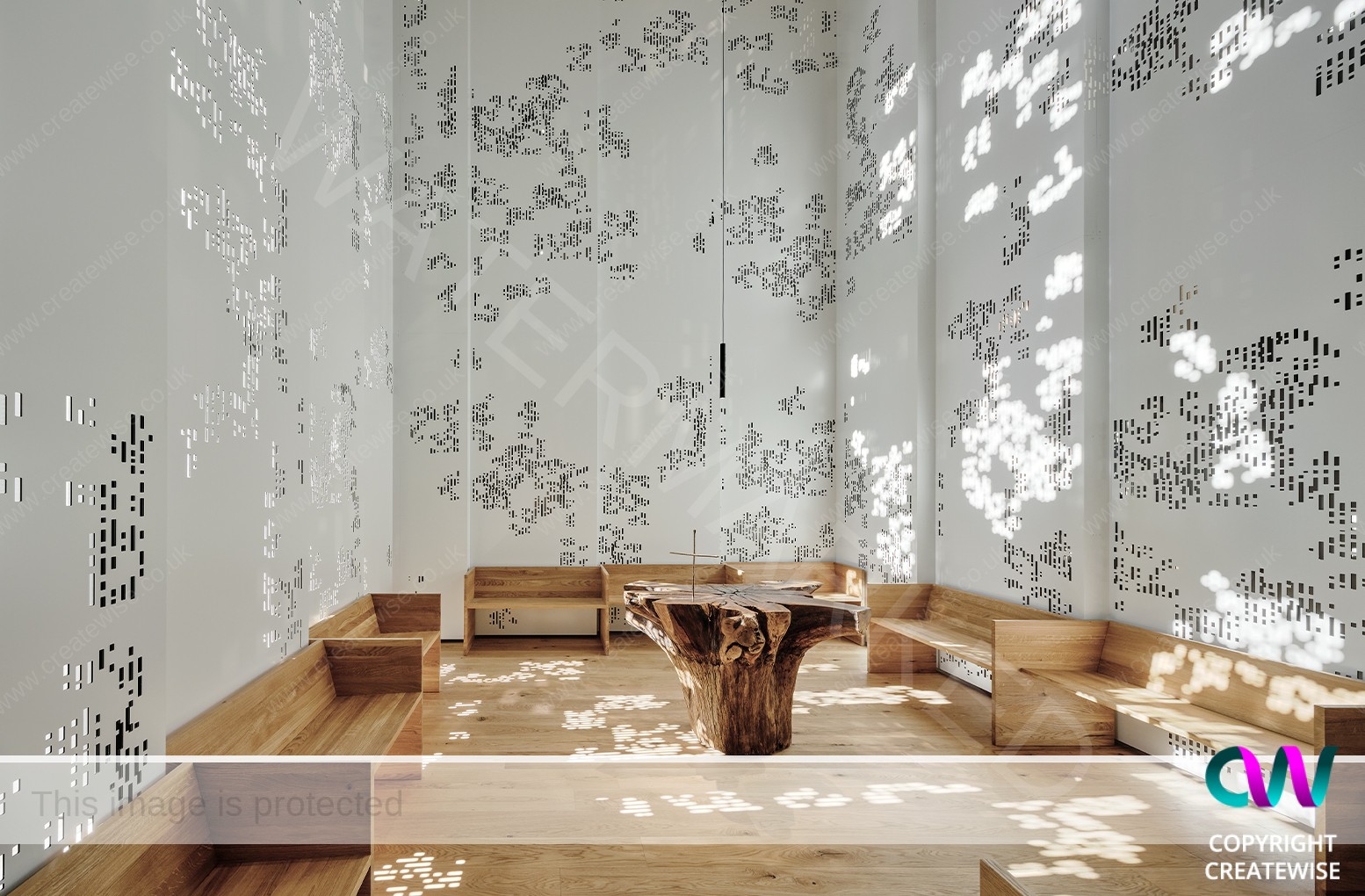
Located within Graz’s State Hospital, the Fractal Chapel offers a serene sanctuary for patients, staff, and visitors to escape the high-pressure clinical environment.
Designed by INNOCAD architecture and hosted by the Protestant Church, the 35-square-metre space utilizes biophilic design principles to foster healing, rest, and prayer.
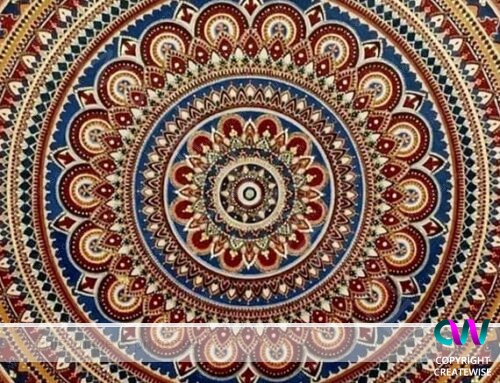
A core feature of the chapel is its use of fractal patterns. These patterns mimic the complex repetitions found in nature, which scientific research suggests can reduce human stress levels by up to 60%. By triggering positive physiological and neurological responses, these “building blocks of nature” actively accelerate the recuperation process.
The interior is defined by perforated wall panels that unfold in a spiral, symbolizing the human life cycle. This movement hides functional elements like multimedia equipment and the sacristy, maintaining a clean, minimalist aesthetic. The material palette adds an earthy warmth to the room. Central to the chapel is a unique altar, crafted from an upturned walnut rootstock to represent the “roots of life.”
The atmosphere is further enhanced by a sophisticated lighting system. Especially designed spotlights project fractal shadows across the room, creating a dynamic interplay of focus and blur. This combination of natural and artificial light conveys a sense of time and movement, successfully bridging the gap between the bustle of hospital life and the tranquil essence of nature.
“The cut-out wall panels allow natural and artificial light to penetrate the room, conveying time and movement and lending it expressiveness, coupled with serenity and calm.”
Martin Lesjak
(This entry is a summary of an article by Martin Lesjak, CEO and founder INNOCAD architecture, 2025)