About Fractals …
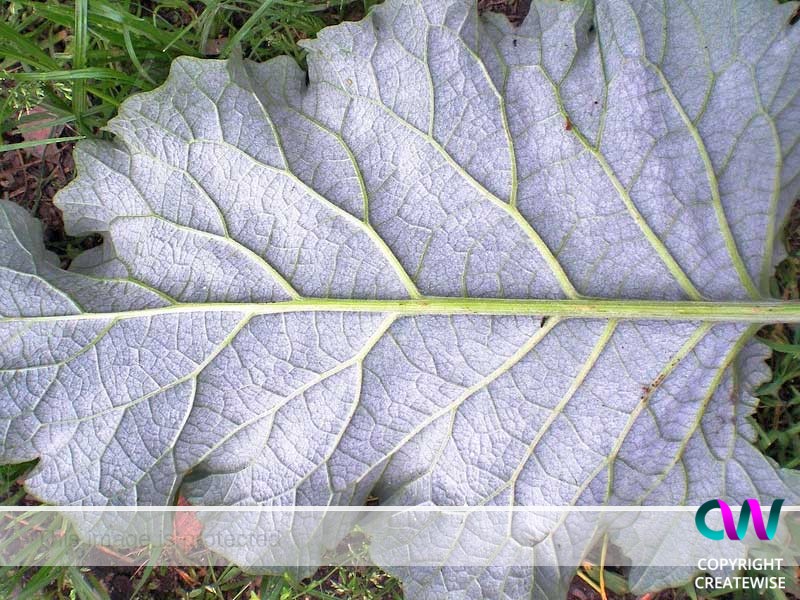
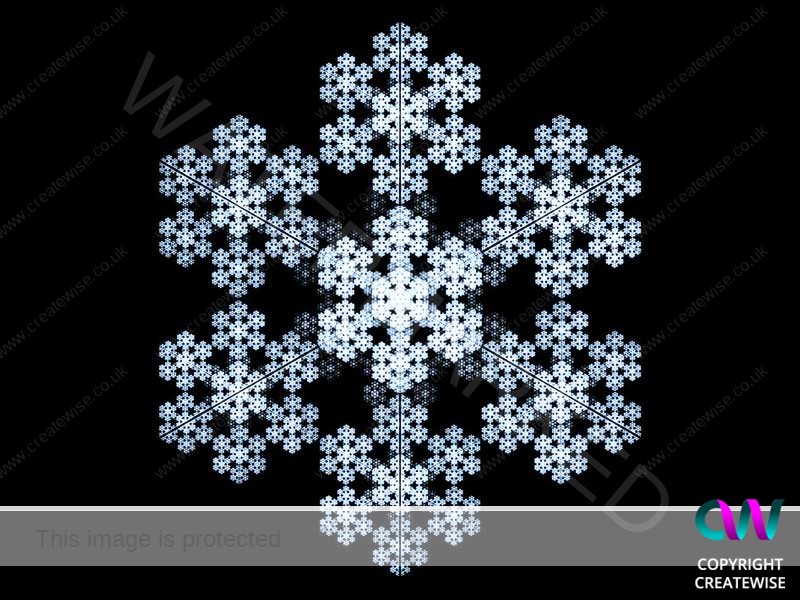
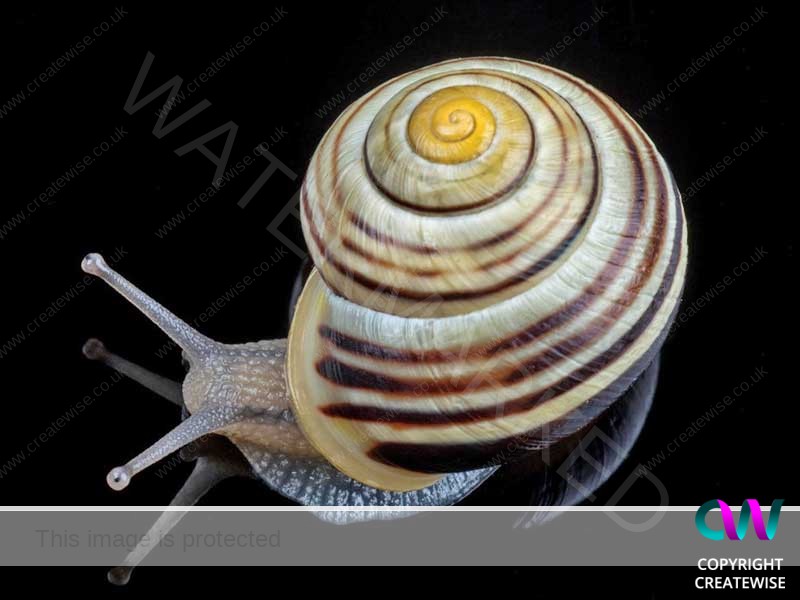
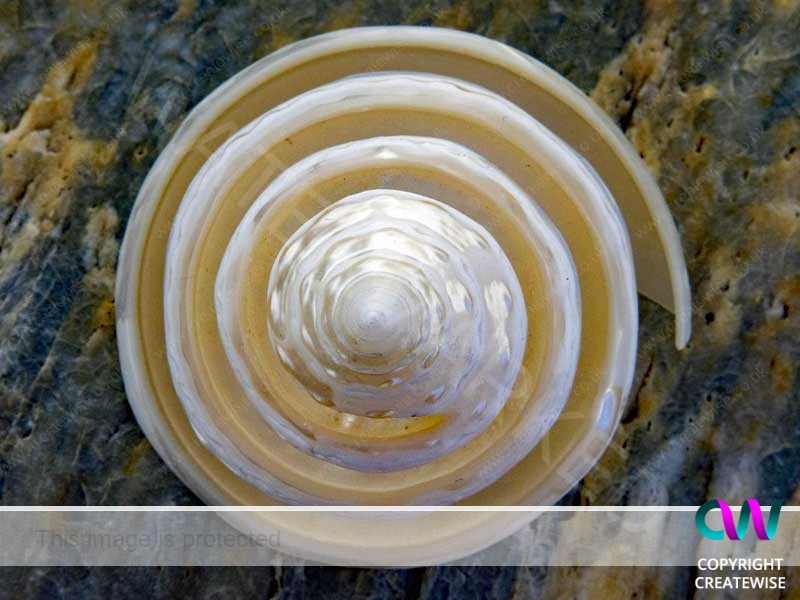
Fractal patterns occur surprisingly frequently in nature. Examples include pine cones, Romanesco broccoli, trees, seashells, ferns, peacock feathers, pineapples, galaxies, and clouds. Fractals have a purpose: the recurrent patterns provide evolutionary benefits by helping plants to maximise their exposure to water and sunlight. Other examples include complex arrangements in tree branches and ice crystals, as well as the intricate structure of river networks and leaf veins.
Fractals in Nature
Imagine you are looking at a fern leaf. If you pluck a small branch off that leaf, it looks like a miniature version of the whole thing. If you take an even smaller tip off that branch, it still looks like a tiny version of the original.
That “geometry of repetition” is the heart of a fractal..


What exactly is a Fractal?
In simple terms, a fractal is a never-ending pattern. They are created by repeating a simple process over and over in an ongoing feedback loop.
The defining characteristic of a fractal is self-similarity. This means that if you zoom into a fractal, you will find smaller versions of the same shape, which contain even smaller versions, and so on, forever.
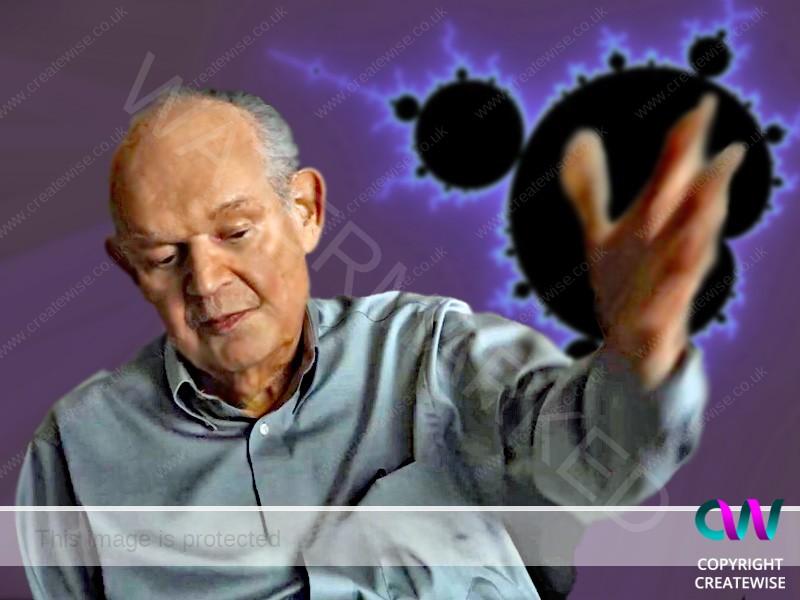
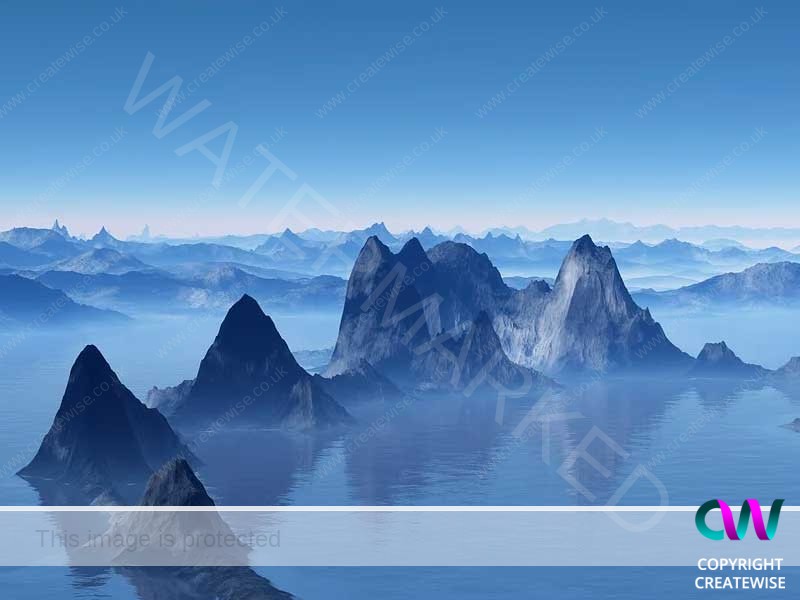
While traditional geometry deals with smooth shapes (like circles or triangles), fractal geometry deals with the “roughness” of the world. As the mathematician Benoit Mandelbrot famously said, “Clouds are not spheres, mountains are not cones, coastlines are not circles, and bark is not smooth.”
The Discovery: Seeing the “Monster”
For a long time, mathematicians thought of shapes that didn’t fit into standard geometry as “pathological” or “monstrous.”
The Early Pioneers:
In the late 19th and early 20th centuries, mathematicians like Georg Cantor and Helge von Koch described shapes that had infinite detail but were impossible to measure with a standard ruler.
Benoit Mandelbrot:
The real breakthrough came in 1975. Mandelbrot, a researcher at IBM, had access to the first computers capable of doing the massive calculations needed to visualize these shapes.