
Fractal fluency is a neuroscience model suggesting that human visual systems have evolved to process the fractal patterns found in nature with high efficiency. This evolutionary adaptation allows the brain to enter a “comfort zone,” inducing a positive aesthetic experience and significant physiological benefits.
Key physiological reactions include the induction of a “wakefully relaxed” state, characterized by higher alpha wave amplitudes in the brain’s frontal area. This neurophysiological response is associated with increased serotonin production, which aids in mood regulation. Furthermore, viewing these patterns effectively lowers physiological stress, a result confirmed by measurements of reduced skin conductance during stressful tasks.
Neuroscience experiments have shown that Jackson Pollock’s “fractal expressionism” paintings—created by pouring paint to form complex, repetitive patterns—induce the same positive physiological responses as nature’s fractals.
This suggests that artists may subconsciously use fractal geometry to appeal to the human visual system.
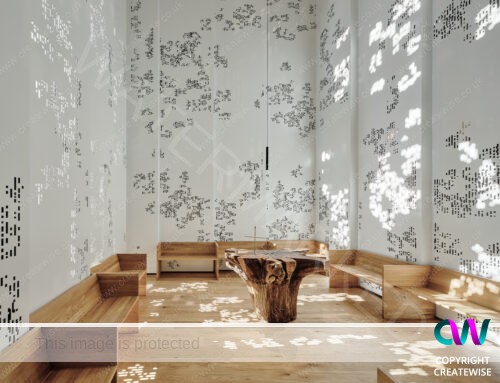
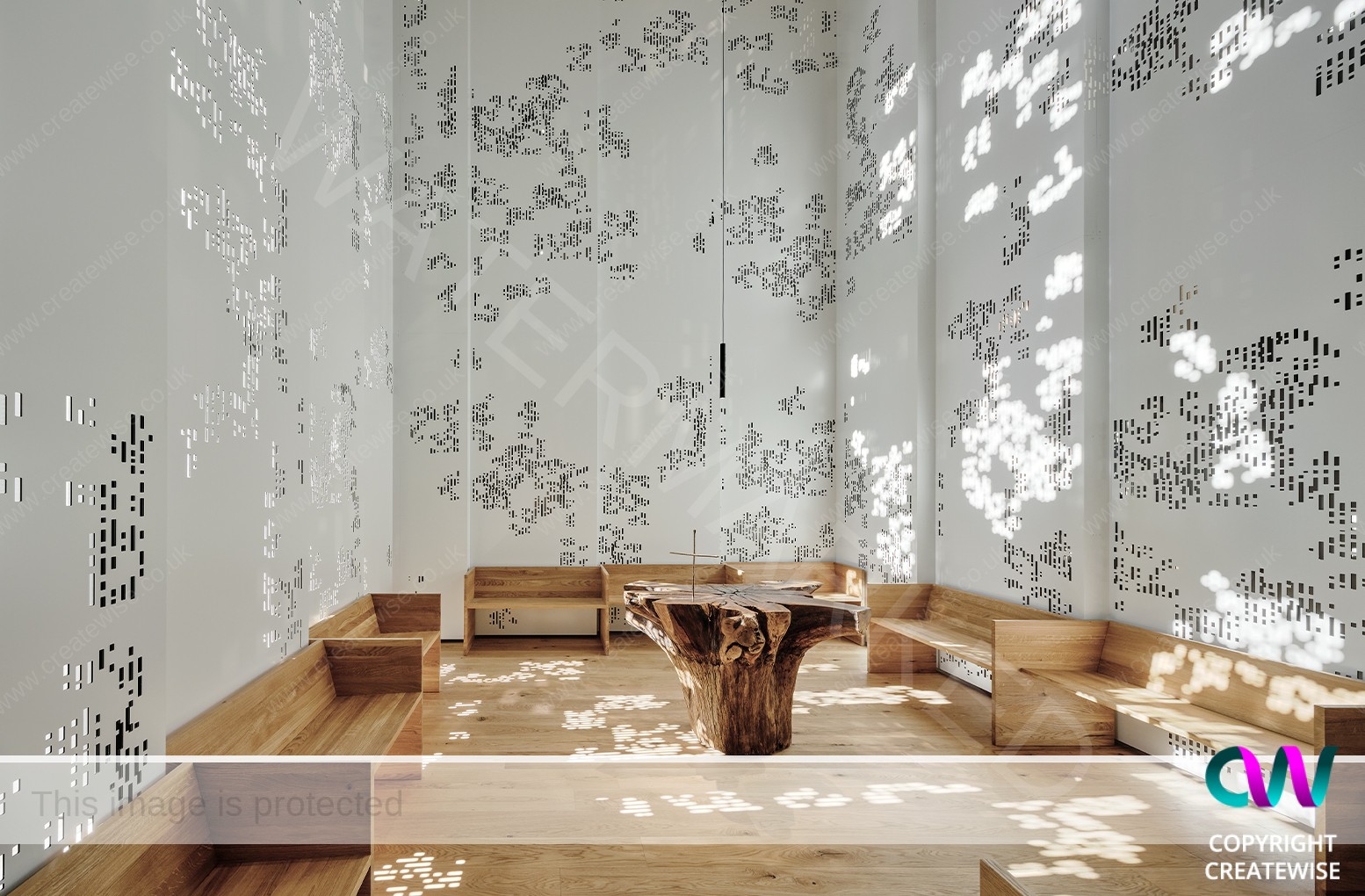
Because modern humans spend most of their time indoors, designers utilize “biophilic fractals” to replicate these health benefits in built up environments
One prominent example is the Fractal Chapel in Graz, Austria, designed to enhance cognitive capacity and reduce stress in a hospital setting. These beneficial effects are not limited to nature; studies show that Jackson Pollock’s “fractal expressionism” paintings elicit the same positive physiological responses as natural scenery.